
![A final serving of golden British Flapjacks [Flapjacks Britanniques] on a plate.](https://elasdenis.com/wp-content/uploads/2026/03/British-Flapjacks-Flapjacks-Britanniques-0-400x301.jpg)
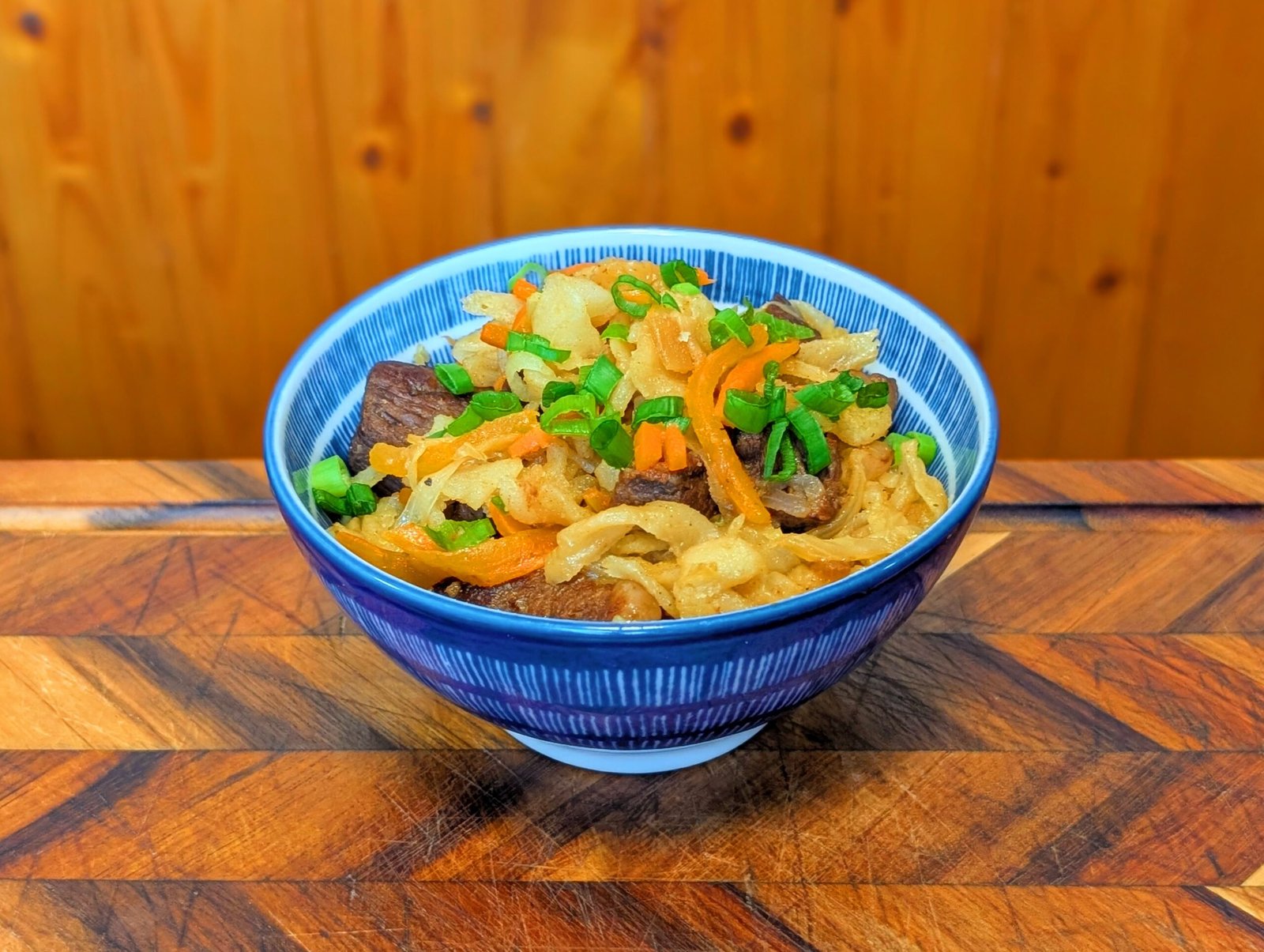
Mongolian Tsuivan Noodles [Монгол цуйван]
Print Recipe
Video
Mongolian Tsuivan Noodles is a hearty one-pot meal with handmade noodles, steamed directly over a savory bed of seared beef and matchstick vegetables.
Dedicated to my parents
Svetlana and Oleg ❤️
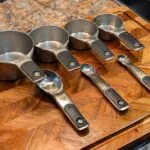
Equipments
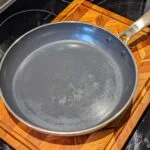
Frying pan Large with a tight-fitting lid
Ingredients
The Handmade Noodles
- 320 g all-purpose flour plus more for dusting
- 240 ml water
- vegetable oil for rolling
The Stir-Fry
- 250 g Top Sirloin or Flank Steak beef cut into bite-size pieces
- 1 Tbsp. vegetable oil
- 1 yellow onion thinly sliced
- 2 carrots cut into matchsticks
- 1 yellow potato peeled and cut into matchsticks
- 1/4 green cabbage thinly sliced
- 2 garlic cloves minced
- 1 Tbsp. soy sauce for umami boost
- 180 ml water
- 1 Tbsp. unsalted butter for the glossy finish
- ½ tsp. salt to taste
- ¼ tsp. freshly ground black pepper to taste
The Toppings
- 2 green onions thinly sliced
servings
Cook Mode
To prevent your phone from sleeping (screen turning off)
Instructions
The Preparation
- Wash and peel the 2 carrots, 1 yellow potato, and 1 yellow onion. Clean the 1/4 green cabbage and discard any wilted outer leaves.
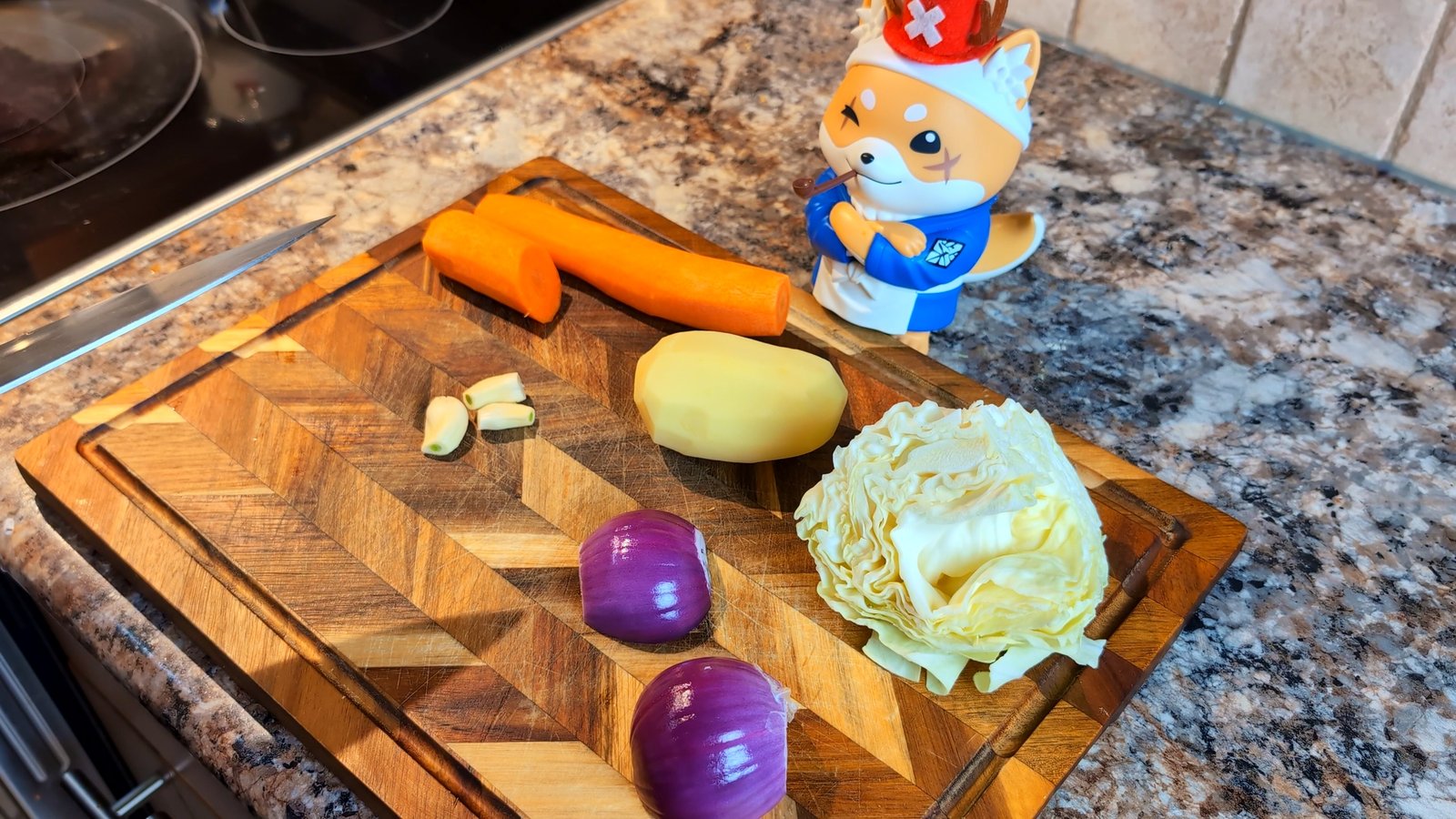
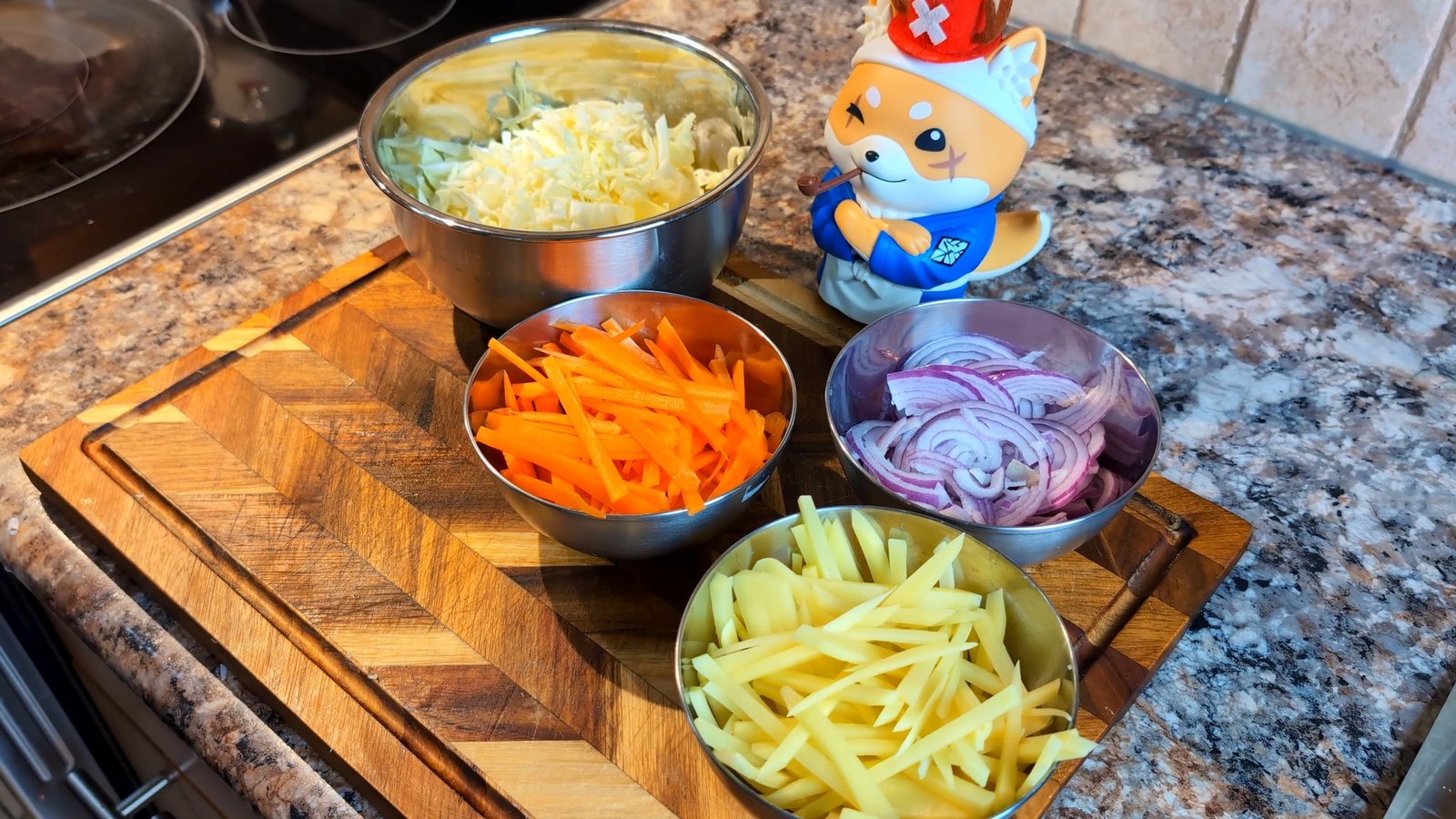
- Cut the 2 carrots and 1 yellow potato into thin matchsticks so they steam evenly. Thinly slice the 1 yellow onion and 1/4 green cabbage, and mince the 2 garlic cloves.
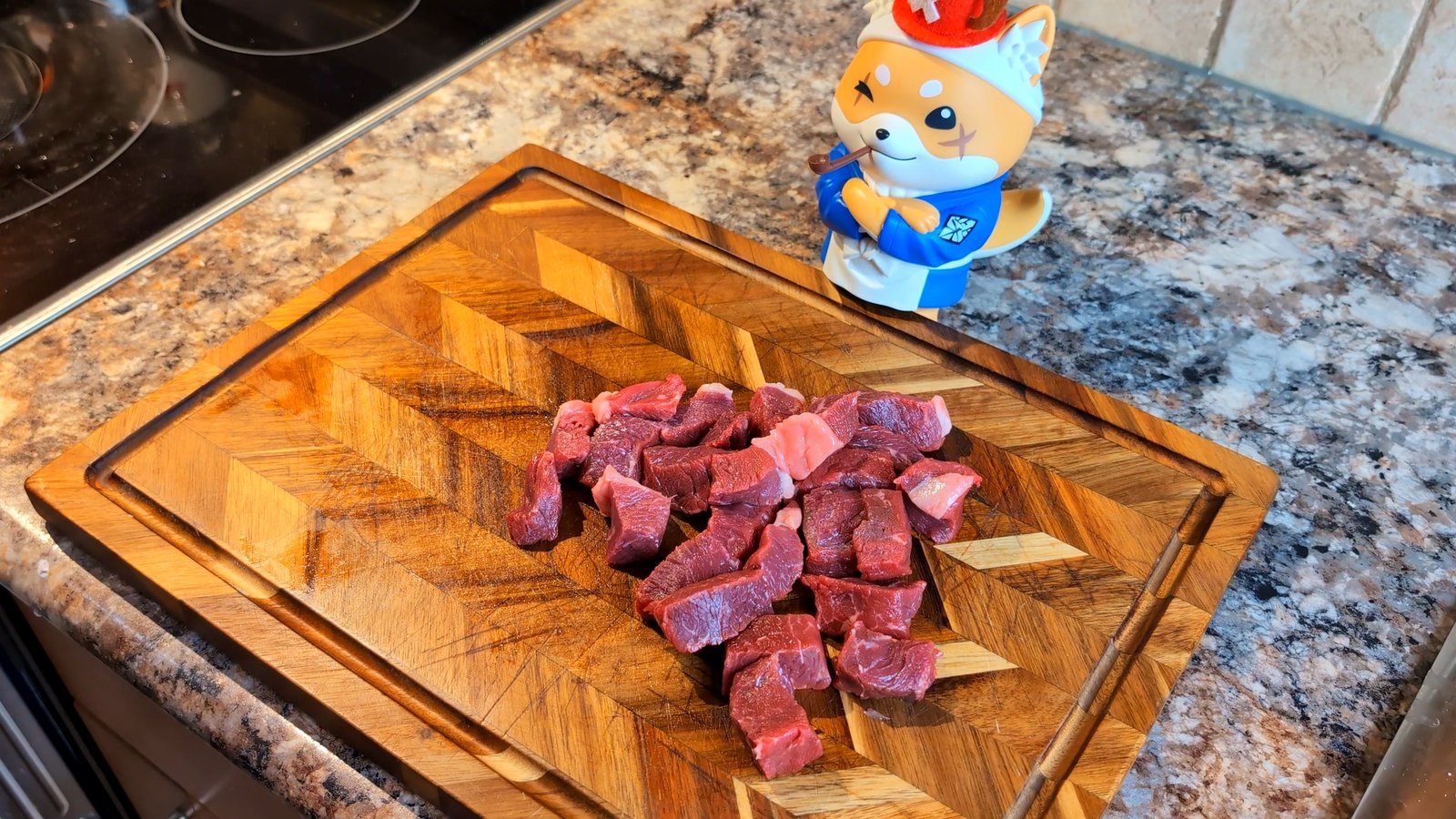
- Finally, slice the 250 g Top Sirloin or Flank Steak beef into bite-size pieces.
The Handmade Noodles
- In a mixing bowl, combine the 320 g all-purpose flour and 240 ml water. Mix to form a dough.
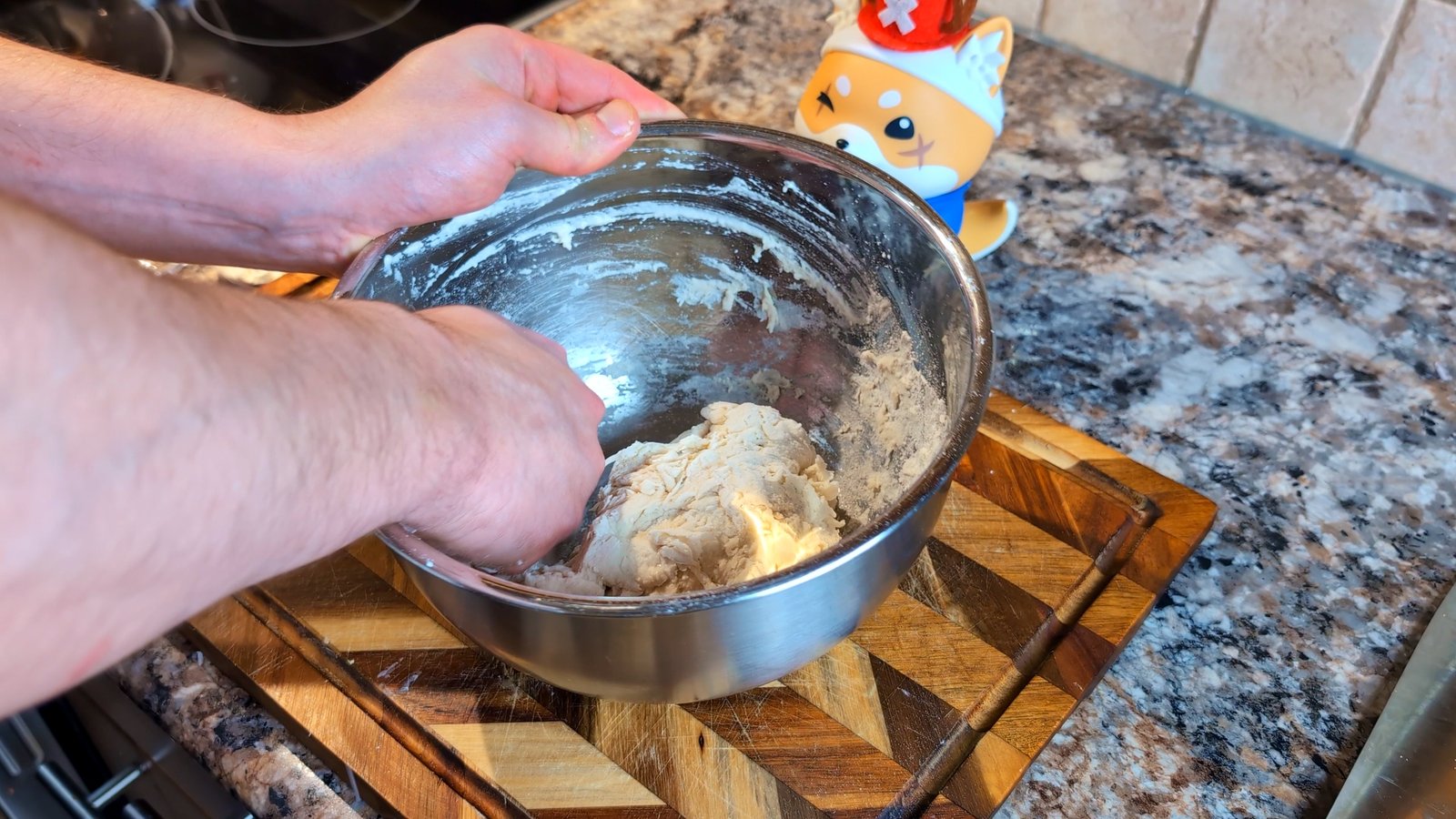
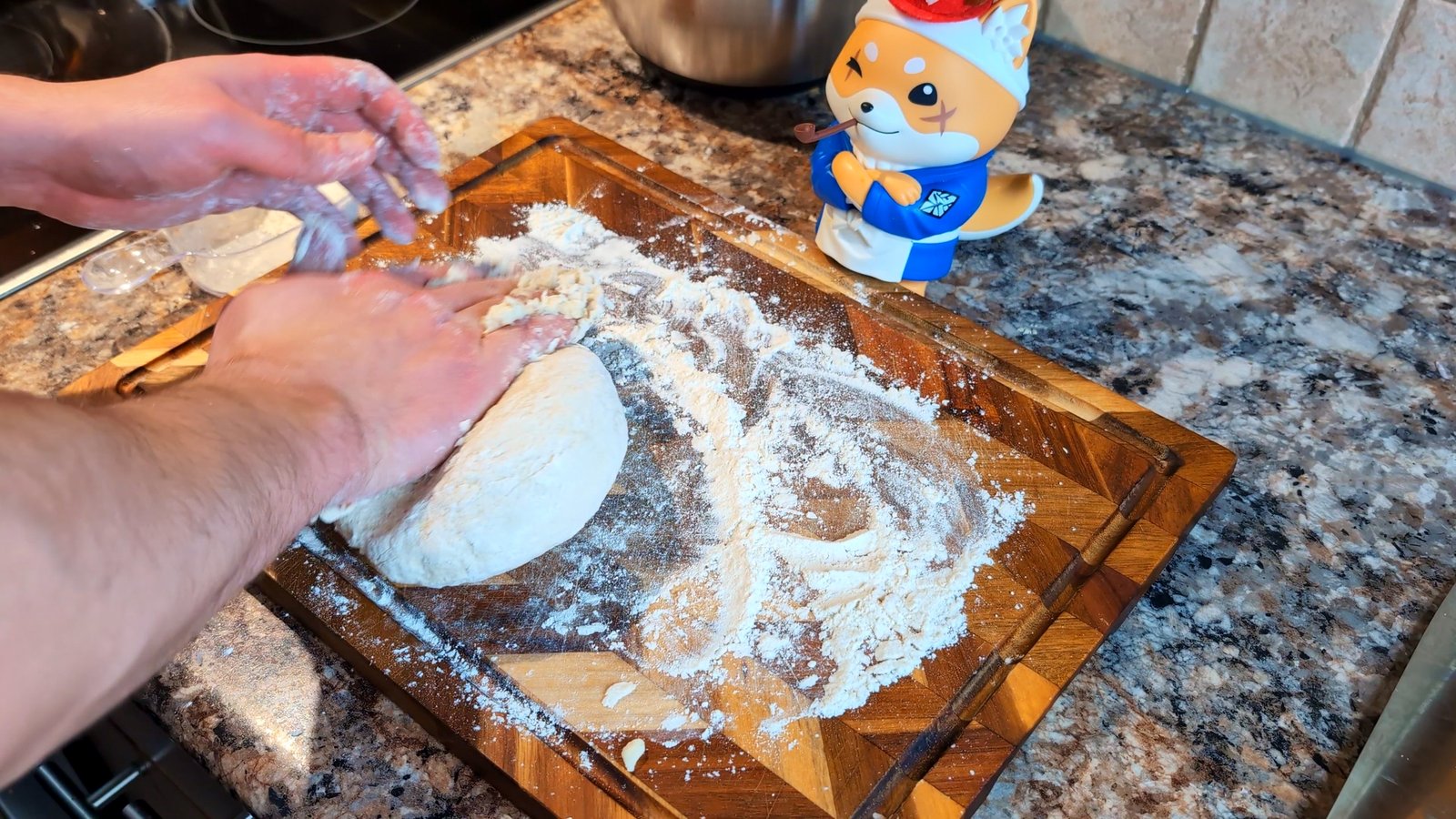
- On a floured wooden cutting board, knead the dough well until smooth and elastic. If it is too sticky, add a little flour; if crumbly, add water.
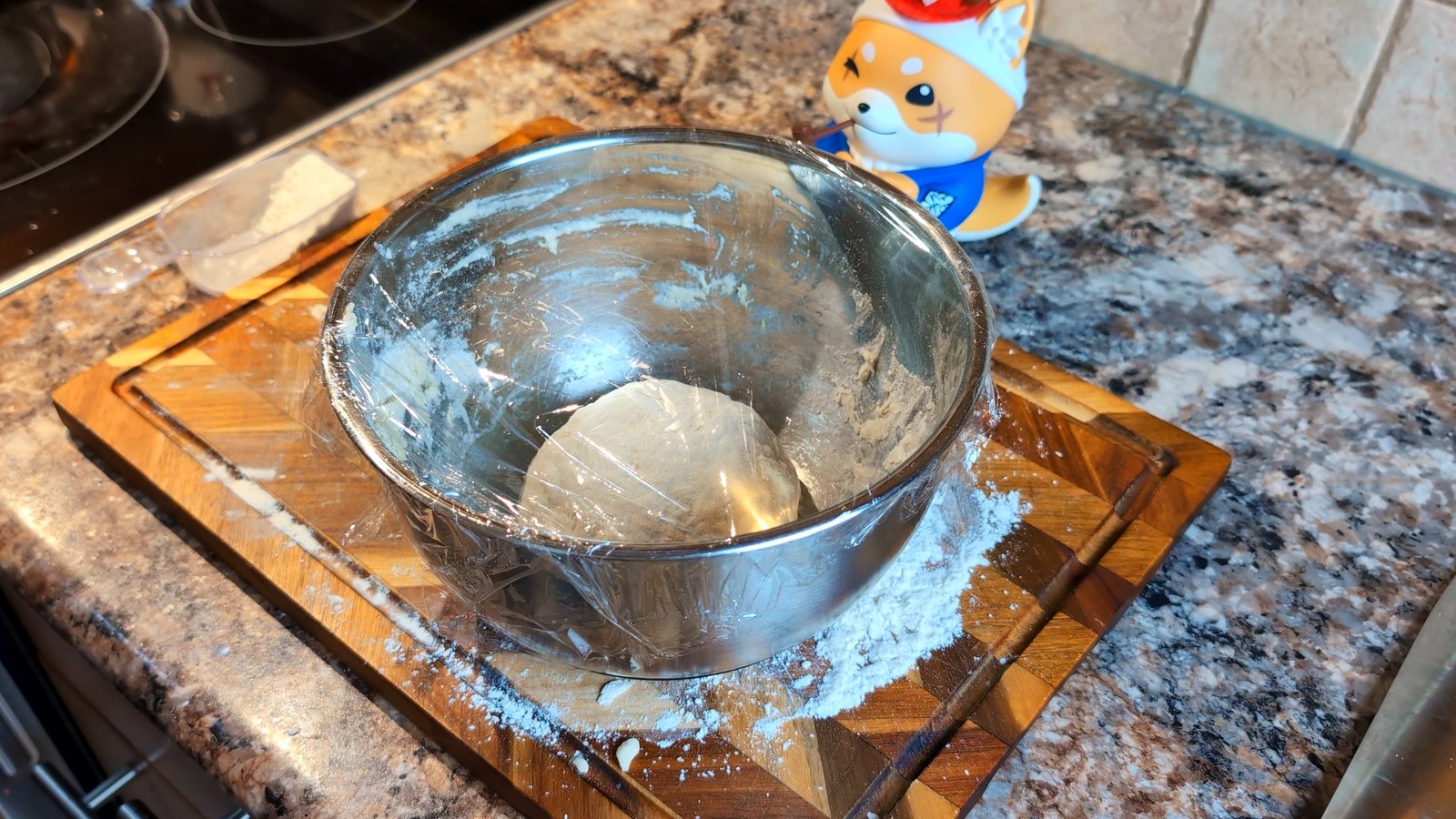
- Cover the dough with an inverted bowl or wrap in plastic and allow to rest for 15 minutes. This helps relax the gluten and makes it easier to roll out.
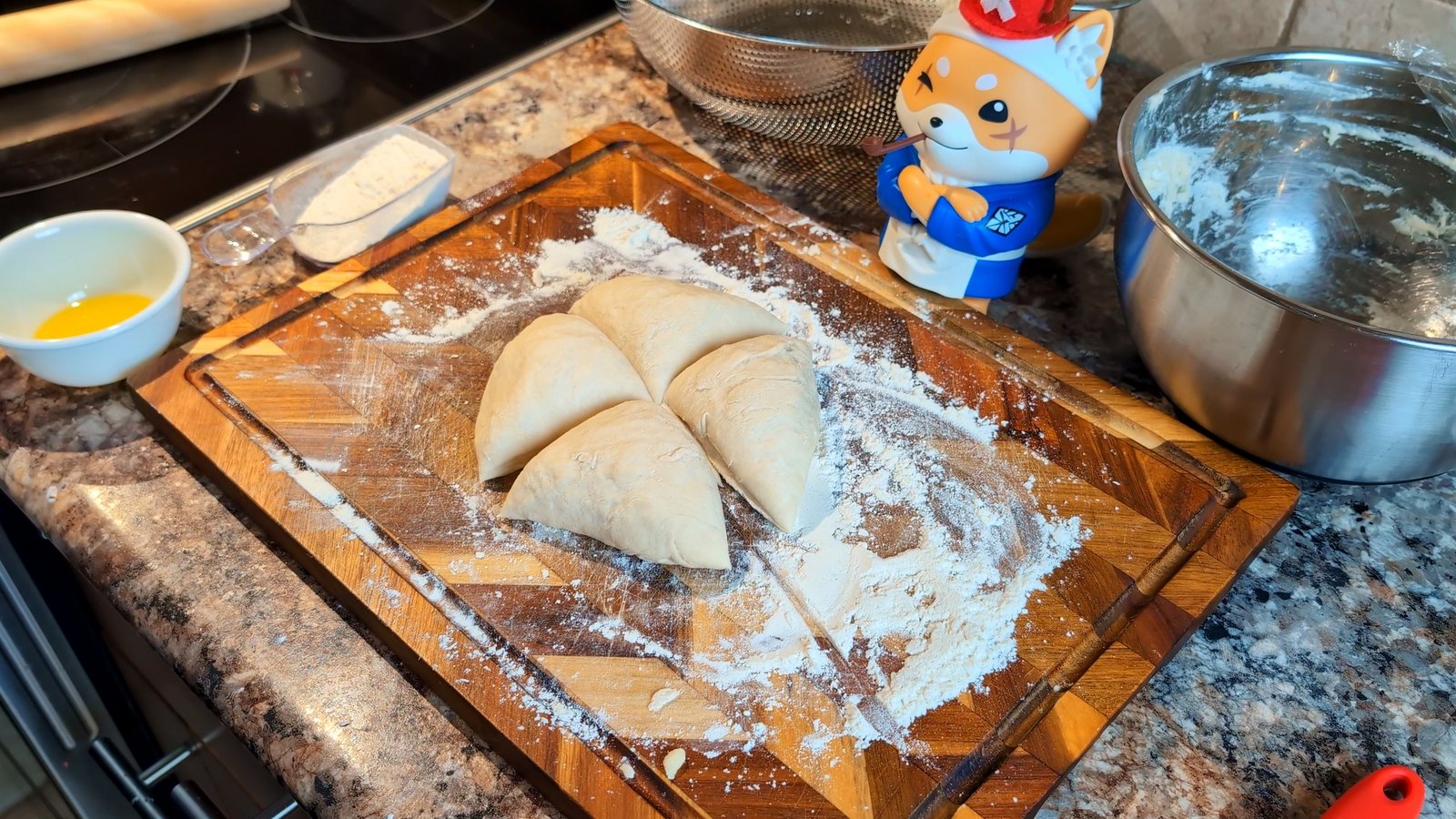
- Divide the rested dough into 4 equal pieces. Keep three covered.
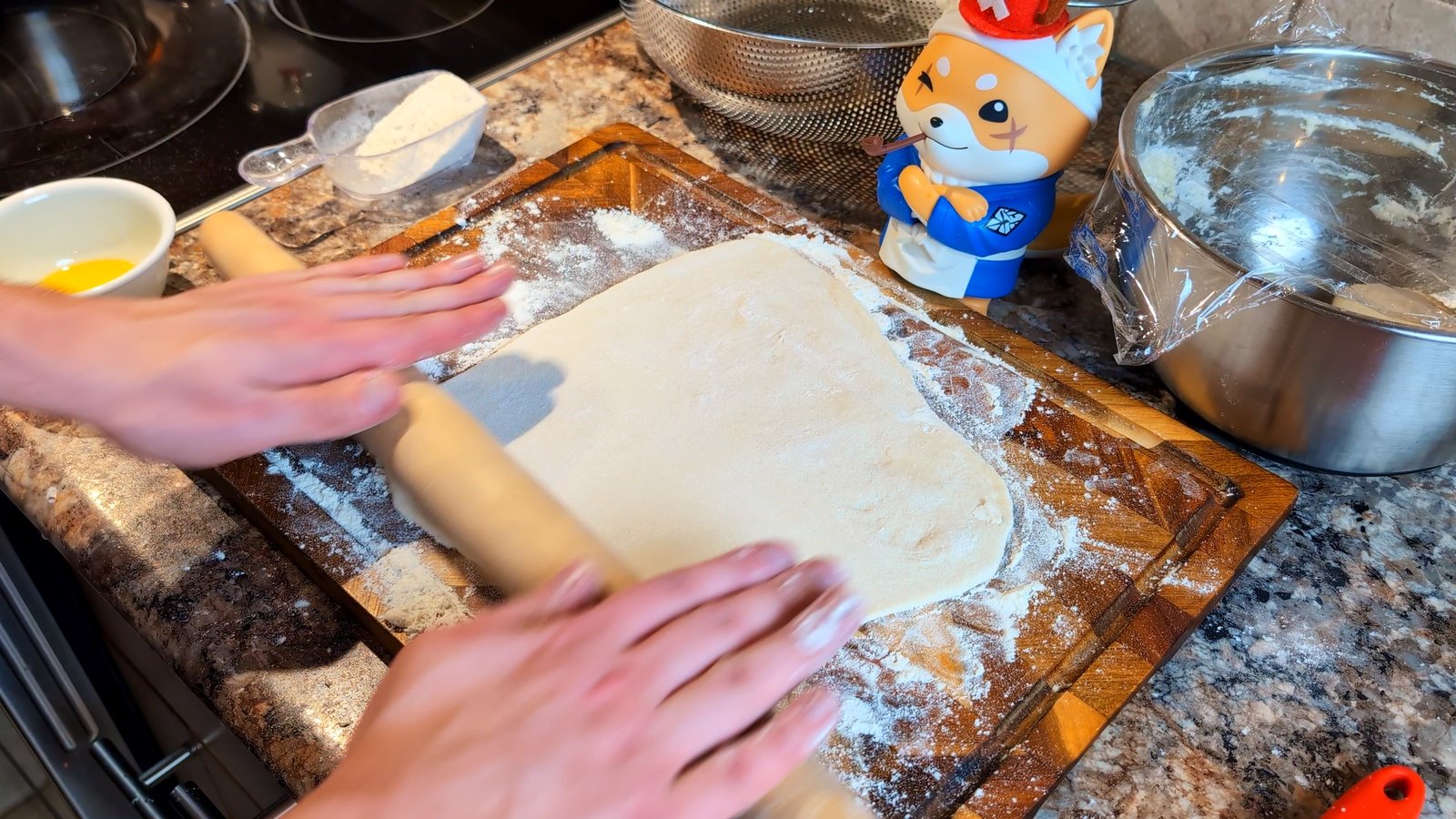
- Roll one piece of dough into a thin sheet on your floured surface, making sure the bottom does not stick.
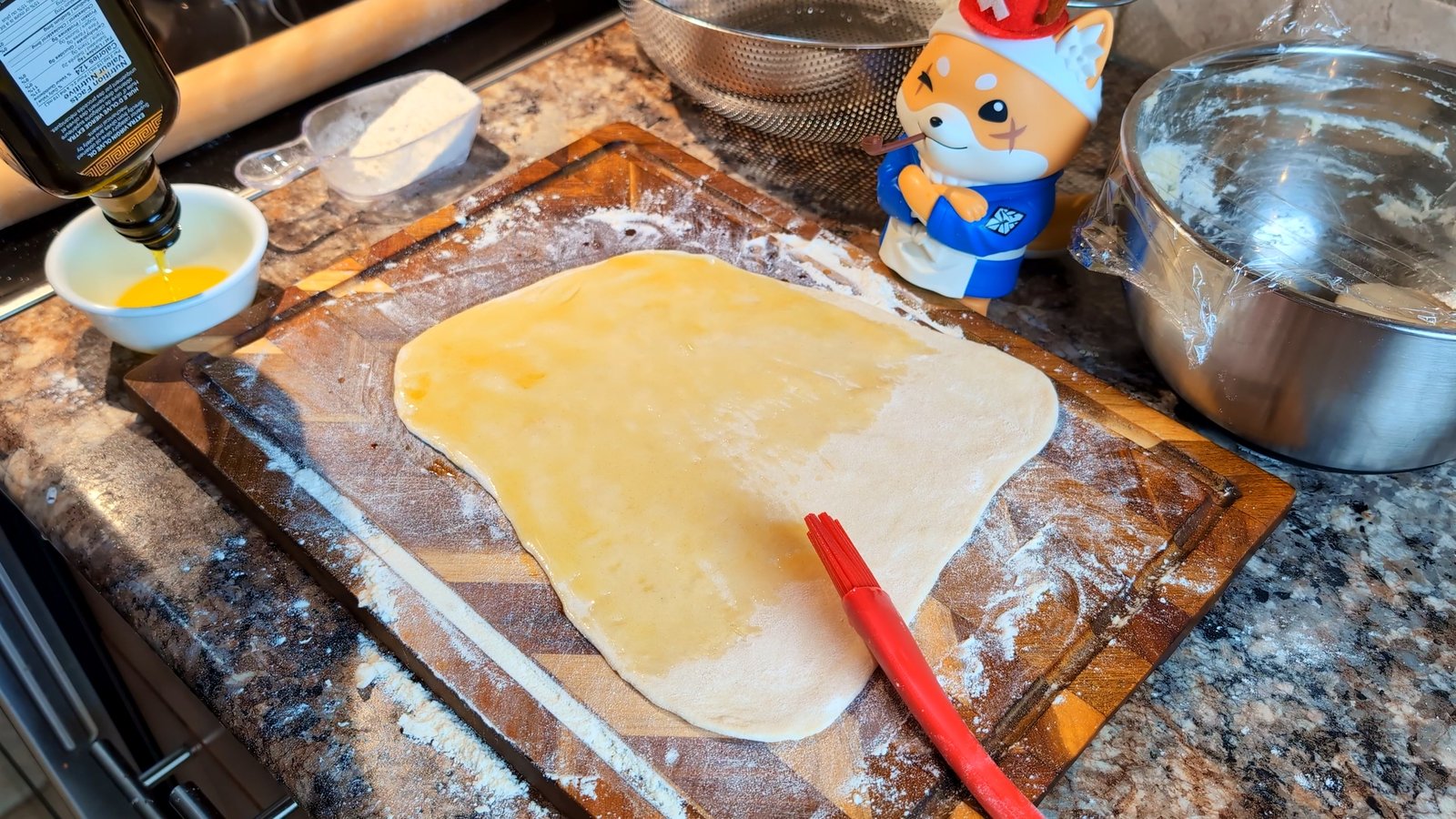
- Grease the top of the sheet with some of the vegetable oil, making sure all parts are completely covered to prevent sticking.
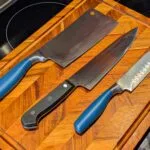
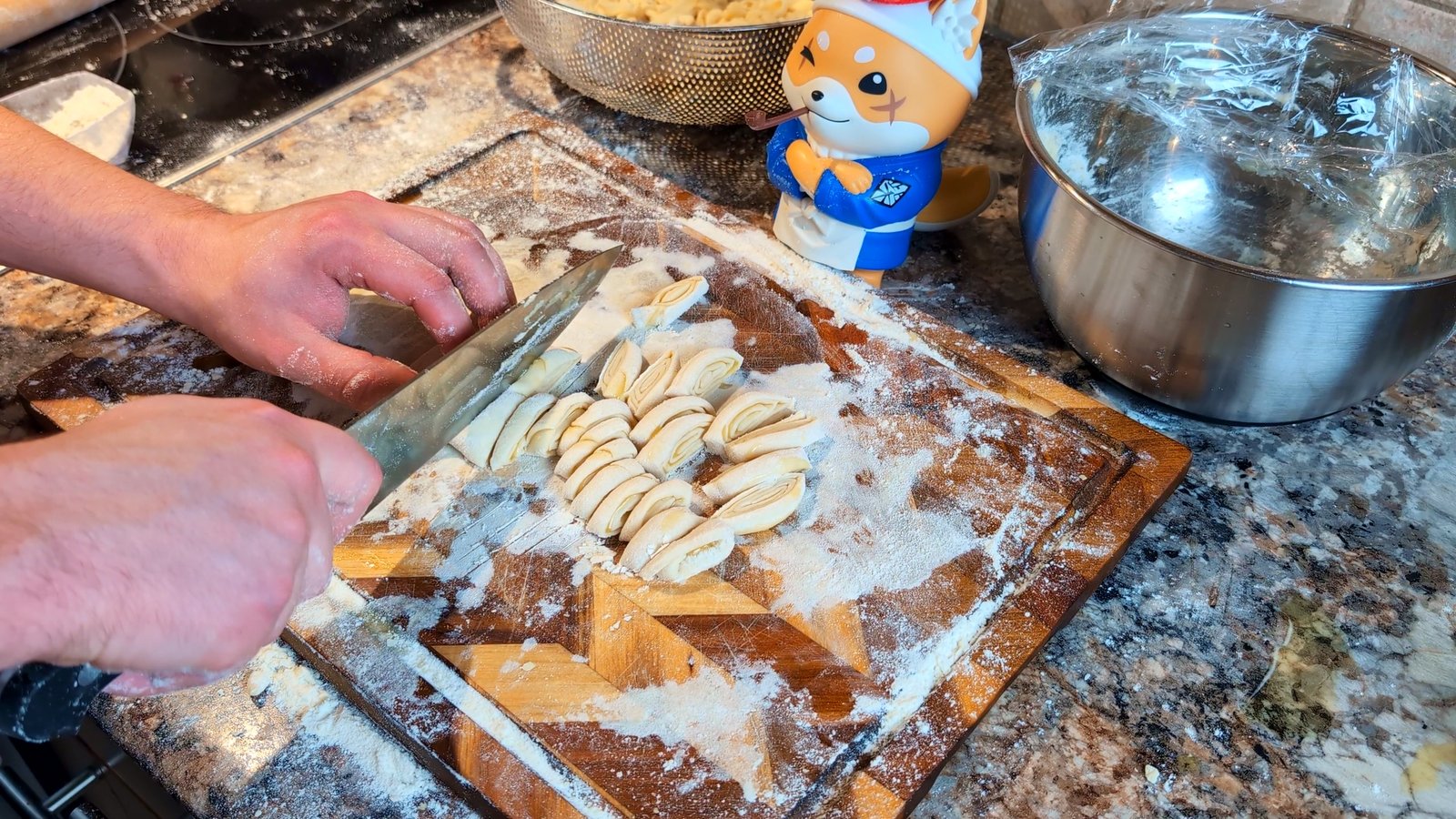
- Loosely roll the sheet up, long side to long side. Using high-quality cooking knives, quickly cut the roll into thin strips about 1/4 inch (6 millimeters) wide.
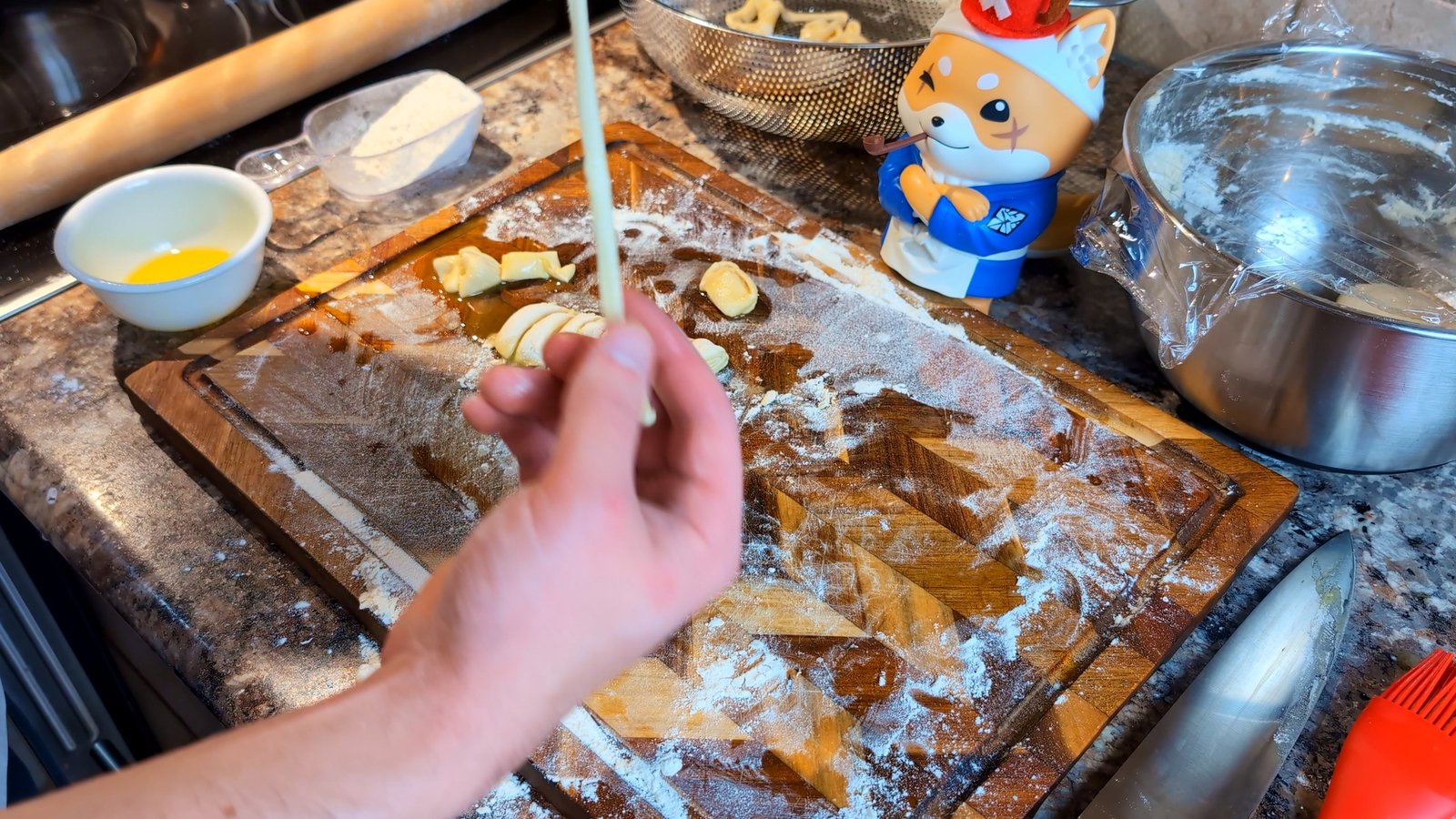
- Gently shake the strips loose with your fingers to separate them. Repeat with the remaining dough. Denis's Tip: Do not store in a bowl, but instead use a flat board with flour. This prevents that they do not stick together because of the moisture in the air.
The Stir-Fry
- Heat 1 Tbsp. vegetable oil in a frying pan over high heat. Sear the 250 g Top Sirloin or Flank Steak beef until a dark golden crust forms before adding the 1 yellow onion. Cook until the onion is softened.Denis's Tip: Achieving a hard sear without moving the meat (the Maillard reaction) creates the deep flavor profile that characterizes an authentic Tsuivan.
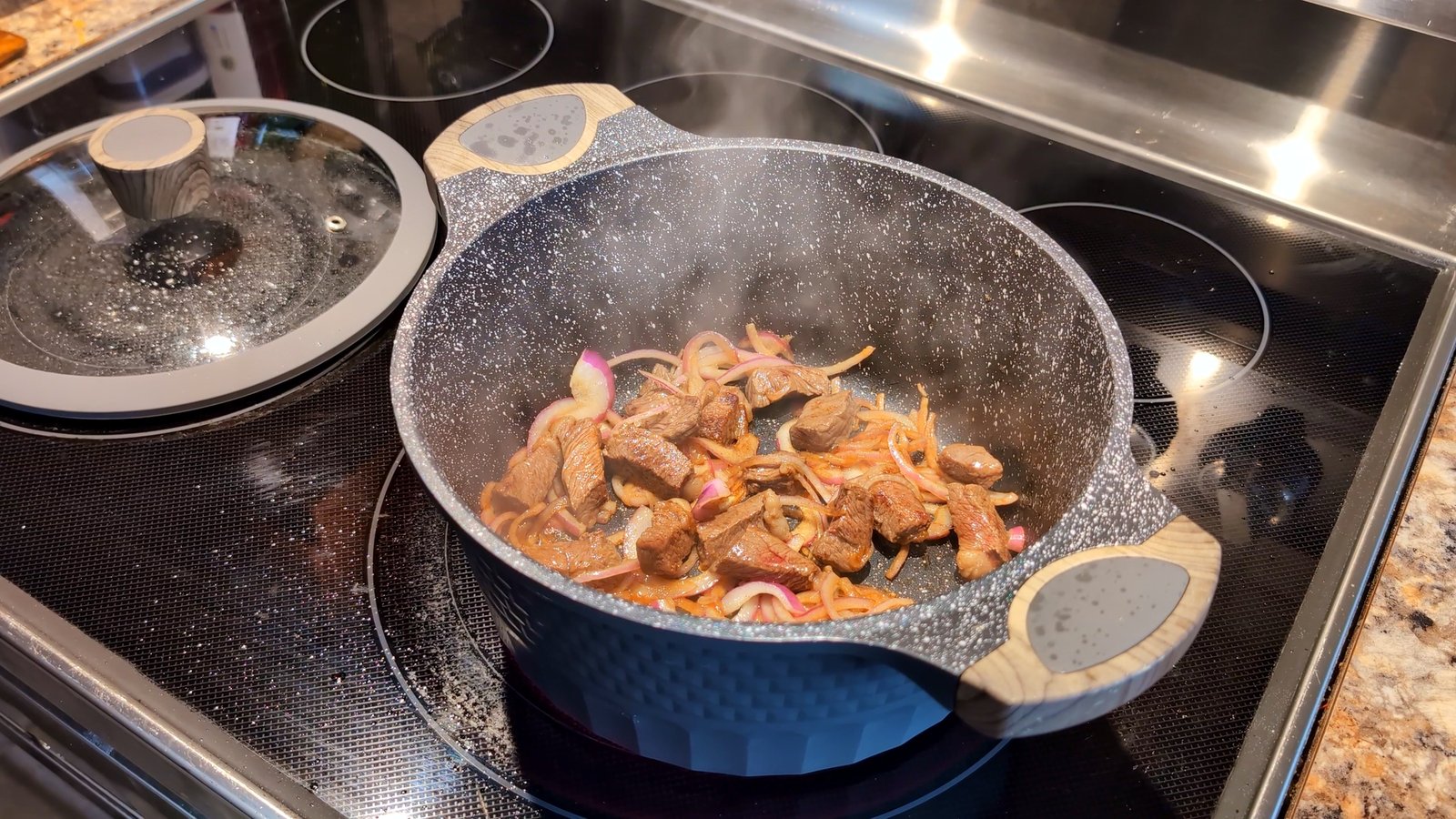
- Add the prepped 2 carrots, 1 yellow potato, 1/4 green cabbage, and 2 garlic cloves. Cook until they are just starting to soften, about 5 minutes.
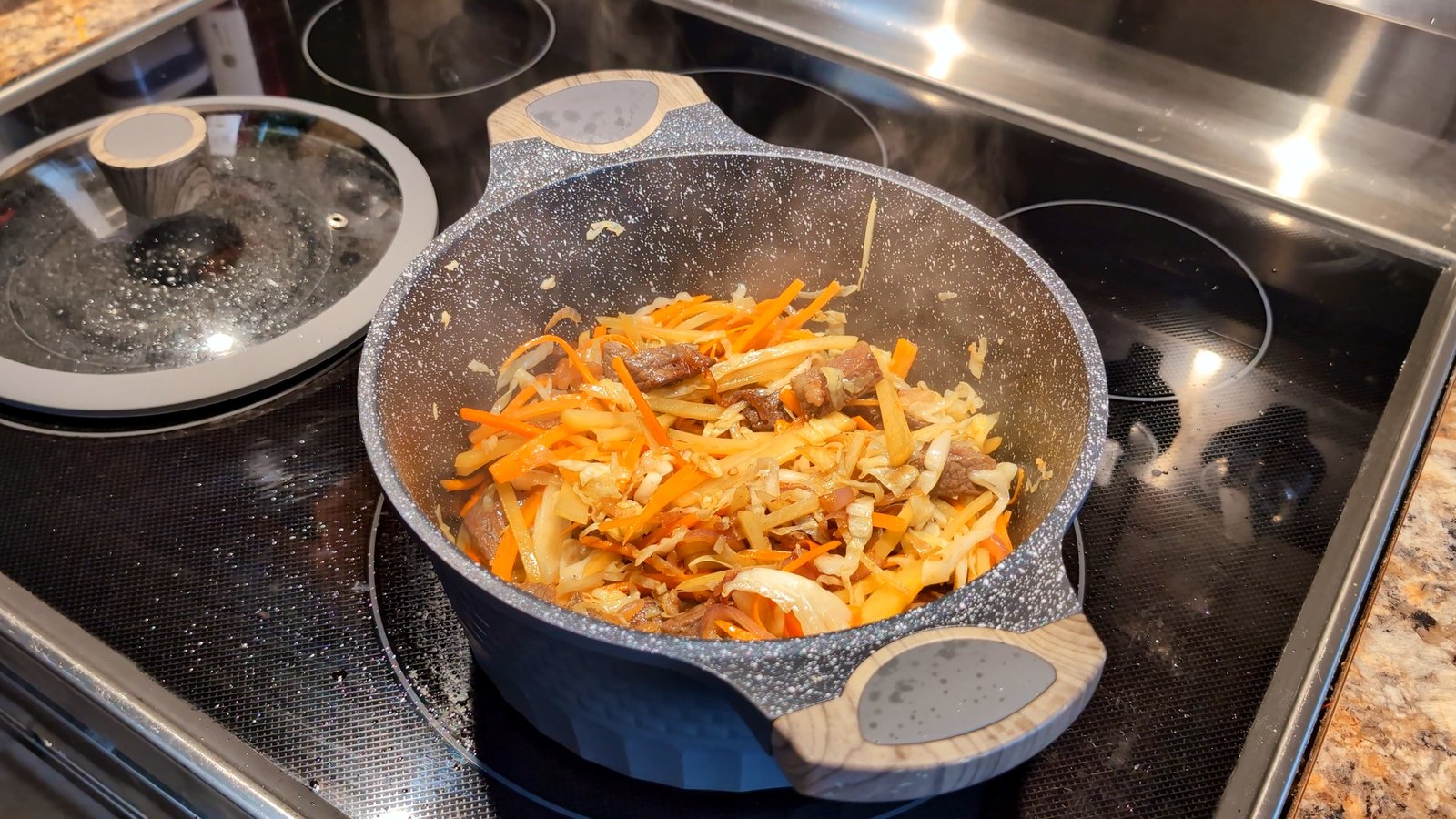
The Steaming
- Combine 180 ml water and 1 Tbsp. soy sauce, pour into the pan, and bring to a boil. Reduce to a simmer.
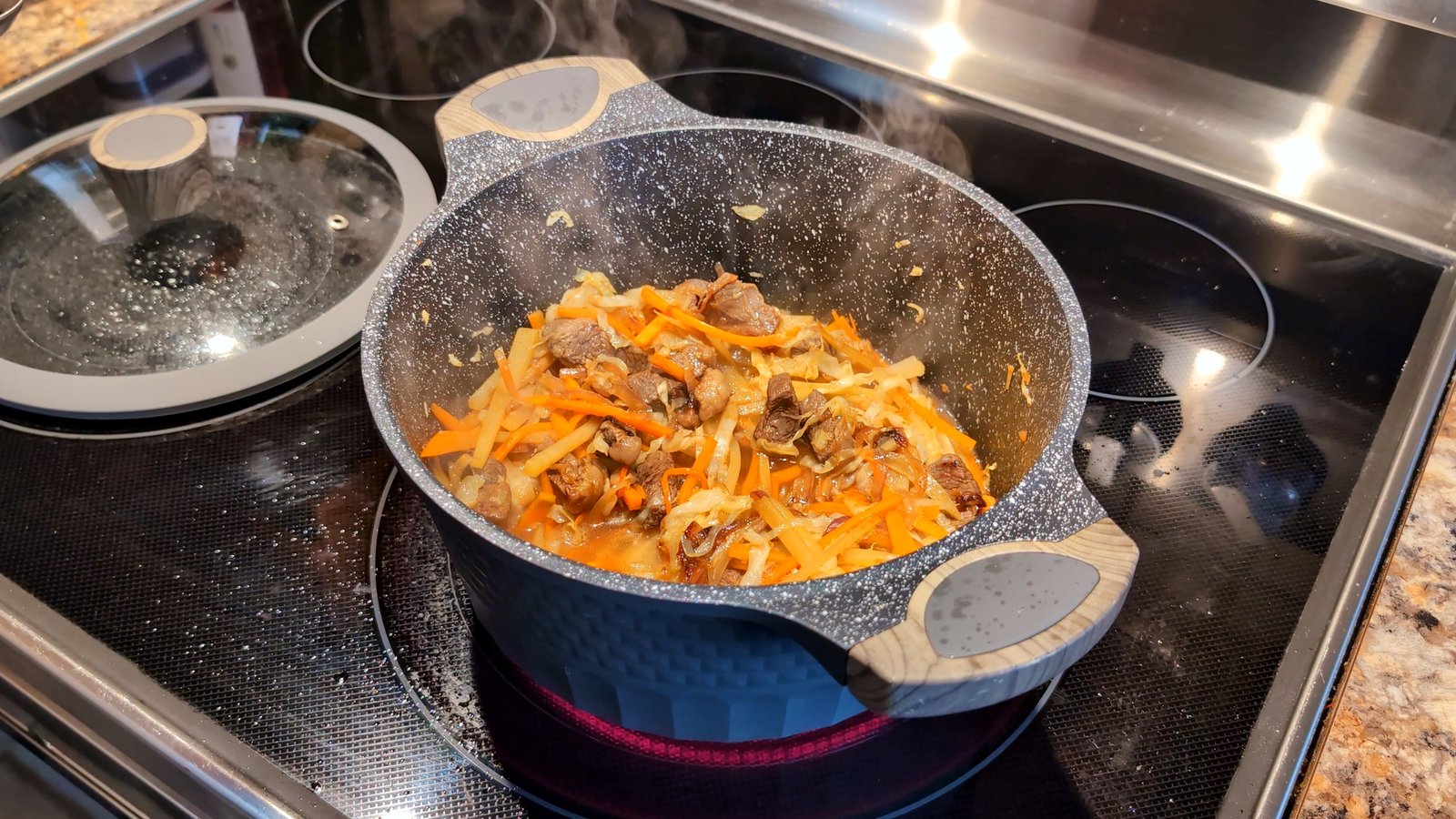
- Arrange the sliced noodles in an even layer over the top of the meat and vegetables, leaving a small hole in the center to allow steam to escape. Cover tightly with a lid and steam the noodles until cooked through, about 15 minutes. If all the water has evaporated before the noodles are cooked, add a little bit more.
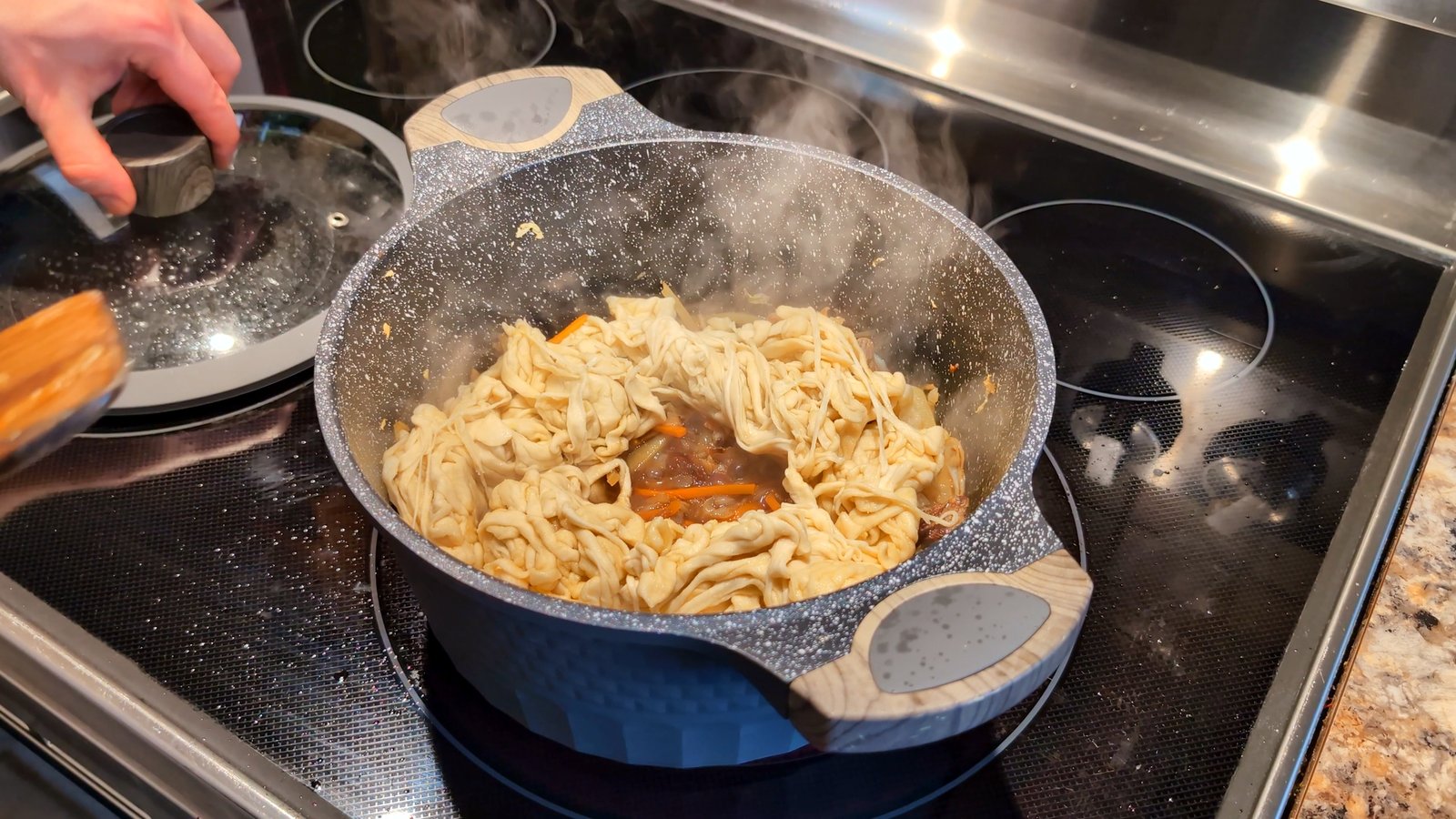
- Once cooked, remove the lid and gently fan the noodles using a paper fan or the pot lid to help dry out the top layer. Use a fork to gently fluff and separate the noodles. Add the 1 Tbsp. unsalted butter and lightly toss all the ingredients together. Season with ½ tsp. salt and ¼ tsp. freshly ground black pepper to taste.
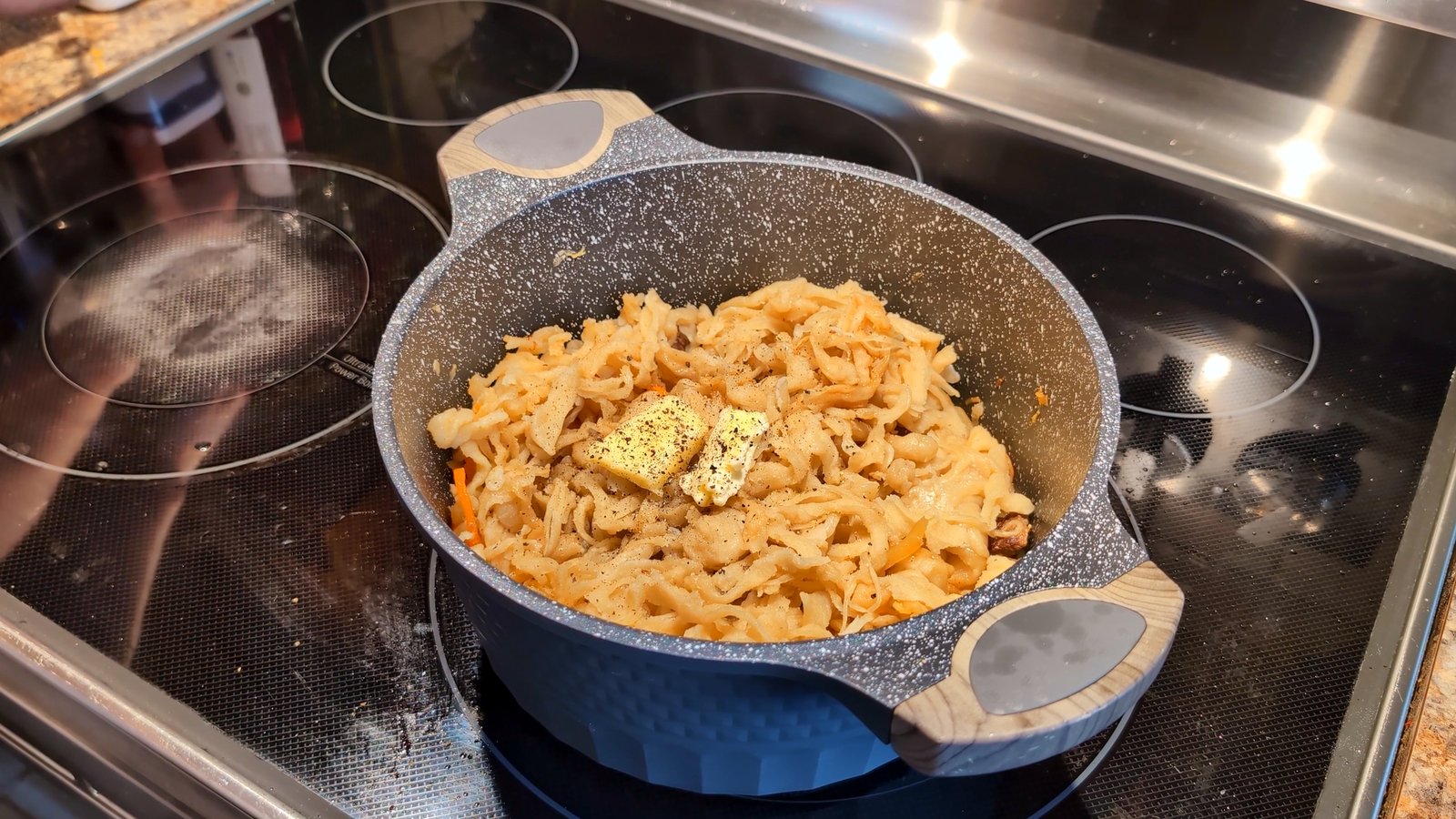
The Serving
- Serve hot immediately, topped with the 2 green onions. Enjoy your authentic Mongolian Tsuivan Noodles [цуйван]!
Nutrition
Serving: 1 serving | Calories: 510 kcal (26%) | Carbohydrates: 66 g (22%) | Protein: 19 g (38%) | Fat: 19 g (29%) | Sodium: 580 mg (25%) | Fiber: 4 g (17%) | Sugar: 3 g (3%)